
Group travel in the tropics has a reputation it does not entirely deserve. The trips that go wrong are rarely ruined by the people; they are ruined by the accommodation, which turns out to have one bathroom too few, nowhere to sit that is not the same room everybody else is in, and a kitchen designed for two. Get the building right and a large group is the best way there is to travel. Get it wrong and a fortnight is a long time.
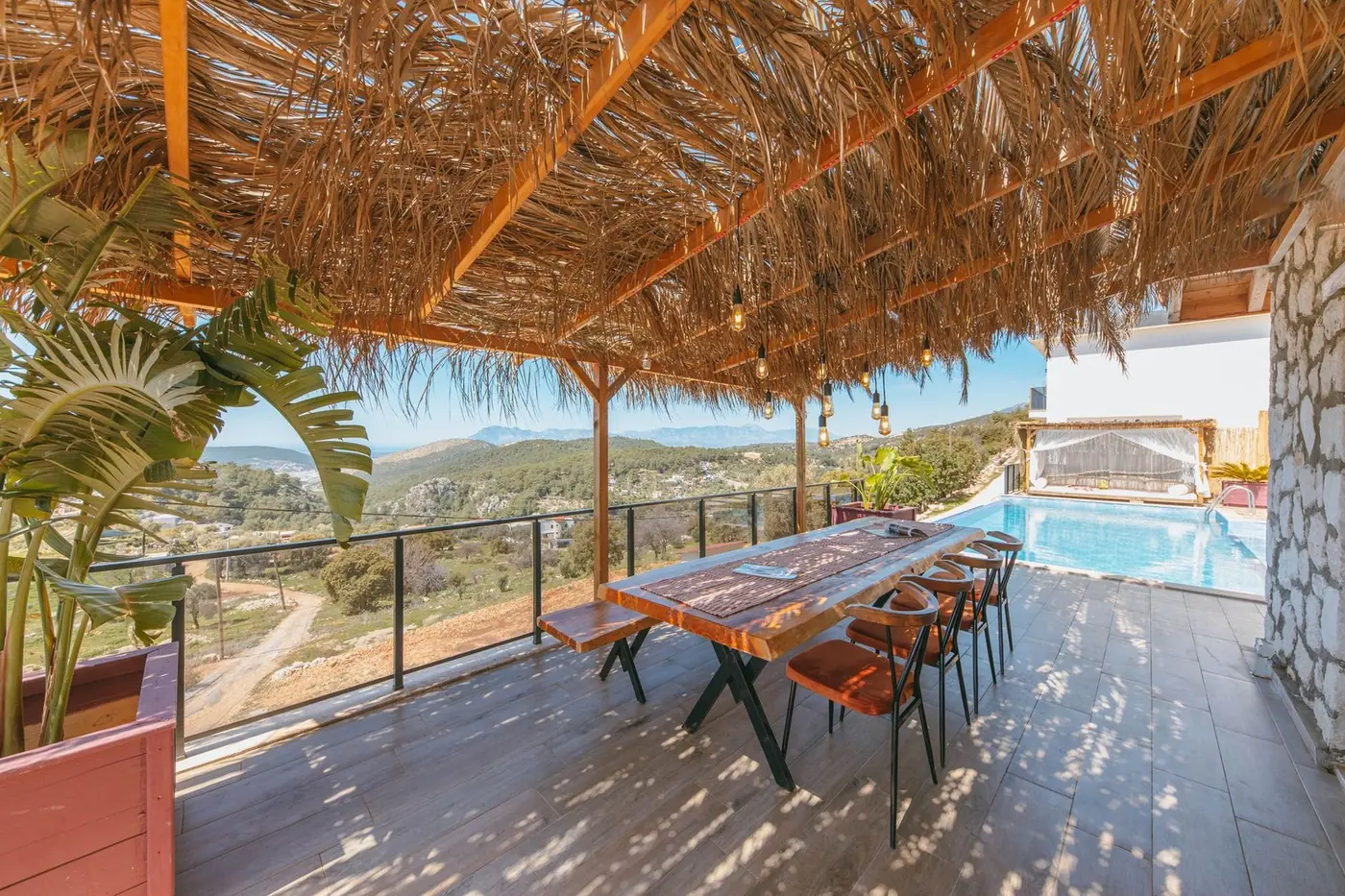
The first requirement is somewhere for everyone to be together, and it needs to be bigger than it sounds. A shared stay lives in one large space — the long table, the kitchen counter, the covered terrace by the pool — and that space carries breakfast, card games, the wet afternoon, the evening meal and the last hour of the night. If it seats eight and there are ten of you, somebody is always on the edge of it, and after four days that matters.
The second is somewhere to be apart, which groups consistently underestimate. Two weeks of unbroken company is a lot for anyone, and the difference between a relaxed house and a tense one is usually the availability of second and third places to go: a reading corner away from the music, a shaded bale at the end of the garden, a bedroom with a chair in it rather than only a bed. Tropical plans are good at this, because the garden supplies most of the extra rooms for free.
The third is a proper kitchen, because shared cooking is where these holidays either succeed or quietly fall apart. A domestic four-ring hob and a small fridge cannot feed ten people twice a day, and the group ends up eating out every night at three times the cost and half the fun. Space for two or three to work at once, a large fridge, and a table long enough to prep on transforms the whole rhythm of the week.
Then the practicalities that nobody photographs: bathroom-to-bed ratio, whether the bedrooms are genuinely equivalent or whether one couple is clearly drawing the short straw, where the air conditioning reaches, how far the furthest room is from the kitchen at seven in the morning, and whether there is a quiet corner for anyone working. These are the details that decide the mood, and they are all answerable before you book if you ask.
Location does the rest. A house that requires a car for every loaf of bread will wear the drivers down; one within a walk of a warung, a shop and somewhere to swim keeps everybody independent. That is worth more than a marginally better view, particularly with children or with a group whose energy levels differ by twenty years.
Where these things line up, the format is hard to beat. For one long-planned family reunion the answer turned out to be a low-impact villa stay in Seminyak — open-sided living areas that let the group spread out under one roof, a kitchen the household cook and the enthusiastic amateurs could share, staff hired from the surrounding village, and enough shaded corners that three generations could be together all day without ever being on top of each other.
The lesson generalises well beyond one house. When you are choosing somewhere for a group, read the floor plan before the photographs: count the seats at the table, count the bathrooms, look for the second sitting-out space, check the kitchen, and work out how far it is to a shop. Do that and the holiday largely runs itself, which after all is the entire point of going somewhere warm with the people you like.