
Advice about responsible travel tends to fail in one of two directions. Either it is so general as to be useless — respect the environment, be a good guest — or it is so demanding that nobody keeps it past the second day. What follows is deliberately narrow: a handful of specific habits that have a measurable effect, cost almost nothing, and are easy enough to sustain for a fortnight.
Carry a refillable bottle and use it. This is the single highest-impact change available to a visitor in Southeast Asia, because single-use plastic bottles are both the most common waste item and the easiest to eliminate. Refill points are now widespread in villas, dive centres, cafés and shops, and a decent insulated bottle keeps water cold enough to actually want to drink in the heat.
Switch your sunscreen before you travel. Oxybenzone and octinoxate are the two ingredients most implicated in coral damage, and both are common in ordinary high-street sun cream. Mineral formulations based on non-nano zinc oxide work perfectly well, and a rash vest does more than any lotion — less cream in the water, better protection, and no reapplying every hour.
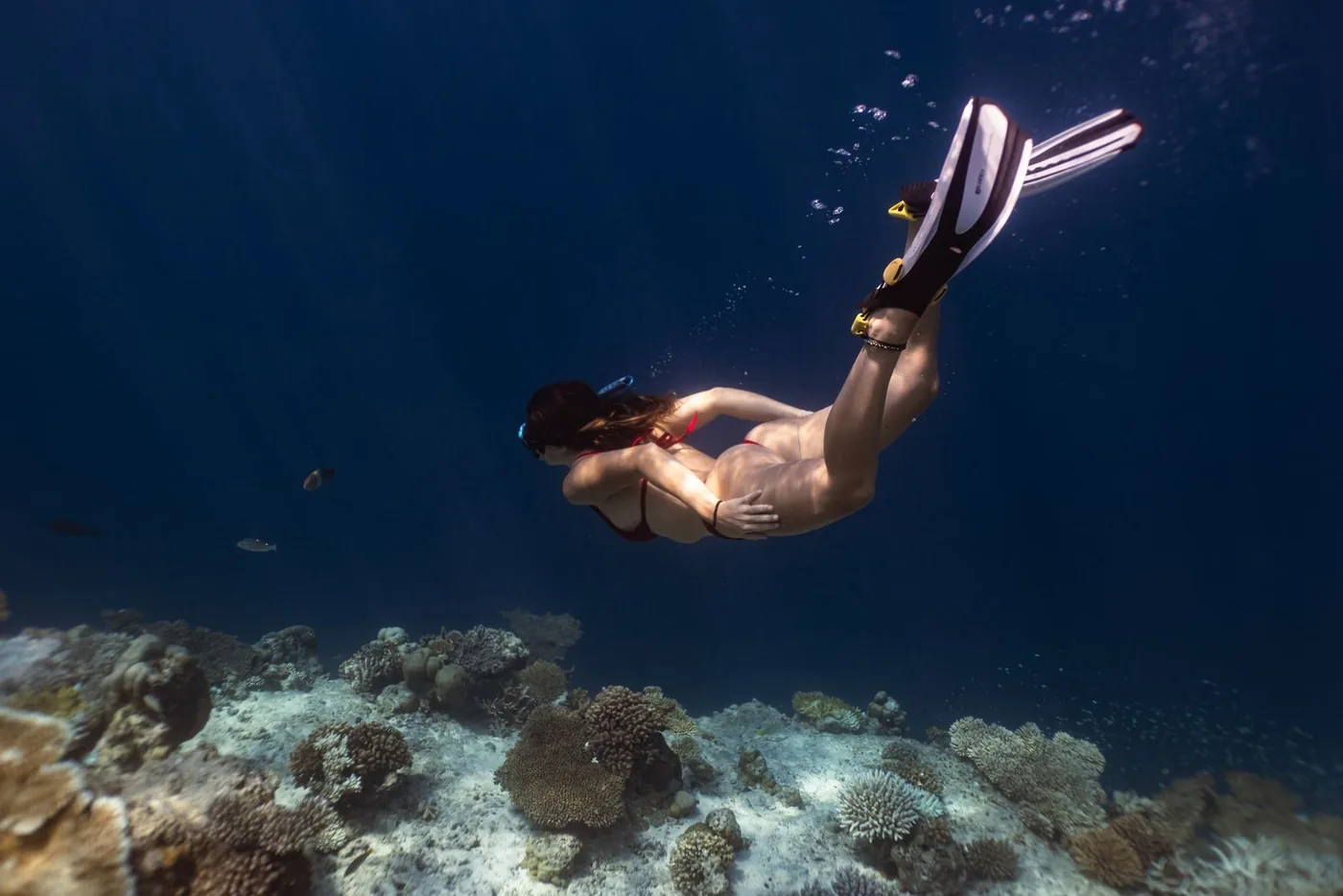
Do not touch anything underwater. Coral is a living animal with a thin protective layer that a hand or a fin destroys in an instant, and growth is measured in millimetres per year. Keep well clear, control your buoyancy, never stand on a reef, and choose operators who brief properly and cap their group sizes. Conservation bodies like the IUCN publish plainly written guidance if you want the detail behind the rules.
Refuse the small plastics as they arrive rather than dealing with them later. Straws, individually wrapped toiletries, plastic bags at the market, cutlery with takeaway. A refusal at the point of offer takes two seconds and no negotiation; sorting a bag of it at the end of a trip achieves nothing at all. A folded tote and a light set of cutlery in the day bag covers almost every case.
Choose the operator rather than the activity. Snorkelling, diving, jungle walks and boat trips are all fine or all damaging depending entirely on who runs them. Look for small groups, briefings that mention contact and distance, no feeding of wildlife, no handling, and local guides on decent terms. A few minutes reading recent reviews with those words in mind will tell you what a brochure never will.
Skip the animal attractions. Anything that involves riding, holding, posing with or being photographed alongside a wild animal is, with very few exceptions, worse than it looks from the outside. The rule of thumb is straightforward: if the animal has to be restrained or trained for the encounter to work, it is not an encounter worth having.
That is the whole list, and its brevity is the point. Bottle, sunscreen, hands off, refuse the plastics, pick the operator, avoid the animal shows. Six habits, all of them easy to keep for two weeks, and between them they cover the great majority of the harm an ordinary visitor is in a position to do. Everything beyond that is welcome, but this is the part that counts.