
In the West, our houses are designed to seal us off from the elements. We build thick walls, fit double glazing, and rely on central heating or air conditioning to hold the outside at bay. The tropics ask for something close to the reverse. Here the climate is not an adversary to be shut out but a resource to be managed, and the buildings that understand this are the ones that feel effortless to be in.
Tropical modernism is the name usually given to the result. It emerged across South and Southeast Asia in the middle of the last century, when architects working in hot, humid places began stripping away the imported European habits — the small windows, the heavy walls, the enclosed corridors — and replacing them with deep overhanging roofs, open sides, high ceilings and rooms that run straight out onto terraces. The style borrowed its discipline from modernism and its intelligence from vernacular building, and in Bali it found a particularly happy home.
The first thing you notice in a well-made tropical house is that the air moves. Cross-ventilation is the whole game: openings on opposite sides of a room, generous ceiling heights so the hot air has somewhere to go, and a plan loose enough that a breeze can travel through the building rather than stopping at the first wall. Done properly it produces a house that stays pleasant through the middle of the day with the air conditioning off, which is both a comfort and a considerable saving.
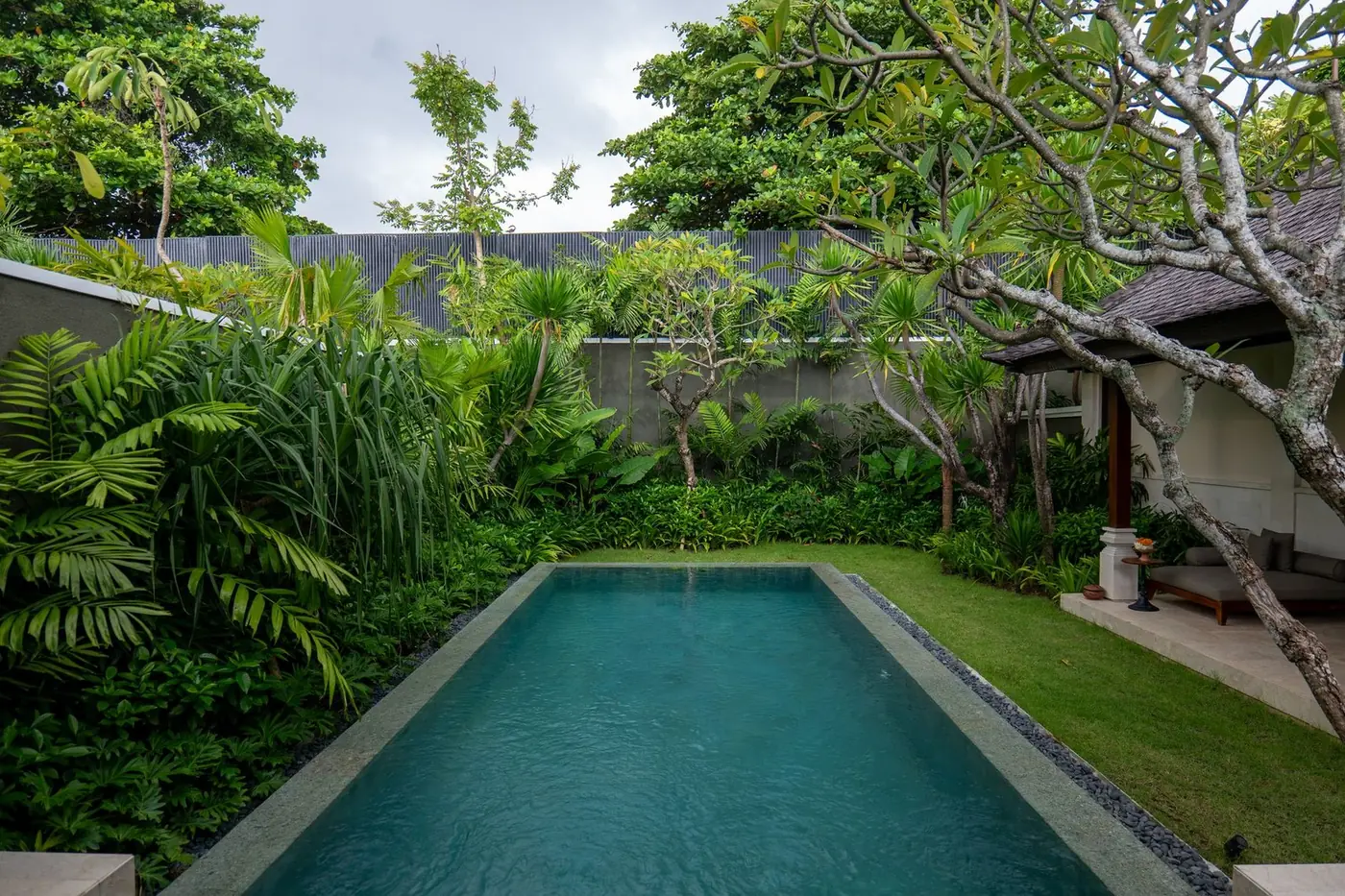
The second thing is shade. A deep roof overhang does more for indoor temperature than almost any other single decision, keeping direct sun off the walls and glass while still letting daylight bounce in underneath. Add a courtyard or a water feature, a canopy of planting on the western side, and floors of stone or polished concrete that stay cool underfoot, and you have a building that manages heat through geometry rather than machinery.
The third is that the boundary between inside and outside is deliberately vague. Sliding or folding walls open a living room onto a terrace; a bathroom is half open to a walled garden; the kitchen looks straight out at the pool. The effect is not merely pretty. It makes a house of quite modest floor area feel enormous, because every room borrows space from the garden beyond it, and it means the whole household drifts naturally outdoors for most of the day.
Materials do the rest of the work. Local stone, teak and ironwood, bamboo, thatch, lime render, rattan and unpolished concrete all weather gracefully in humidity and heat, where imported finishes tend to blister, warp or look tired within a season. There is an honesty to these surfaces that suits the light as well: strong tropical sun flatters texture and punishes gloss, so the rooms that photograph best are usually the ones built from the plainest things.
None of this is nostalgia. The best contemporary houses in Bali, Sri Lanka, Kerala and northern Queensland are doing what the old ones did, with better engineering and a clearer conscience — orienting the plan to the prevailing wind, harvesting rainwater, shading the glass, planting for cooling, and running the mechanical systems as a backup rather than a crutch. The pleasure of staying in one is inseparable from the fact that it works.
Which is why open-plan architecture has come to define the top end of tropical accommodation. It is not a styling choice imposed on a brochure. It is the built answer to a specific climate, arrived at over generations, and refined by architects who took it seriously. Stay somewhere that gets it right and the experience is unmistakable: the house is quiet, the air is moving, the garden is three steps away, and you stop noticing the temperature at all.