
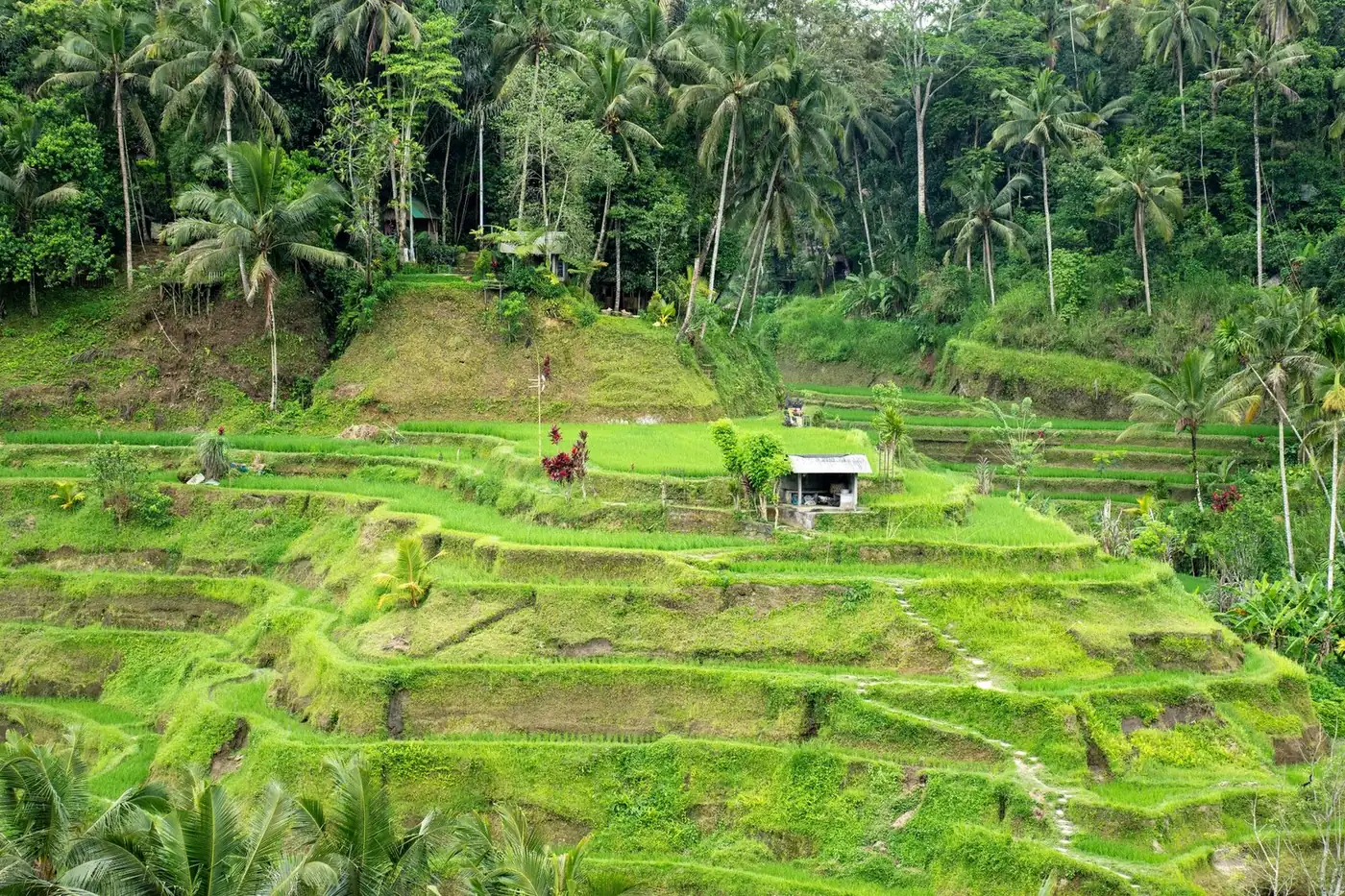
The stepped green terraces of central Bali are among the most photographed landscapes in Asia, and almost everybody who visits comes home with a version of the same picture. Rather fewer come home understanding what they were looking at, which is a shame, because the terraces are the surface expression of one of the most quietly remarkable pieces of social engineering anywhere in the world.
The system is called subak. Bali's rivers run down from volcanic highlands to the coast, and for more than a thousand years the water has been shared by cooperative associations of farmers, each managing the flow through a network of channels, weirs and tunnels to the fields below. Membership is by field rather than by wealth, decisions are taken collectively, and the whole arrangement is bound up with the water temples that sit at the key junctions of the system.
That religious dimension is not decoration. The temples set the calendar, and the calendar sets the planting. Because upstream and downstream farmers flood and drain their fields in a coordinated rhythm rather than whenever suits them individually, water is shared out fairly through the dry months and pests are starved out by synchronised fallow periods. It is a pest-control and water-allocation regime disguised as a religious observance, and it works.
It was tested, badly, in the 1970s. Agricultural modernisation programmes pushed new rice varieties, chemical inputs and continuous cropping, and instructed farmers to plant as often as possible rather than follow the temple calendar. Yields rose briefly, then fell as pests exploded and water disputes multiplied. Studies of the system eventually concluded that the traditional schedule had been outperforming the modern one, and the calendar was restored.
For a visitor the lesson is mostly about how to look. The famous viewpoints at Tegallalang and Jatiluwih are worth seeing, but the terraces are a working agricultural landscape and not a park; the best hours are early, before the coaches, when the light is low and the farmers are actually in the fields. Walking a path between the plots, quietly and on the marked routes, tells you far more than the roadside platform does.
Go with a local guide if you can, ideally someone from a farming family, and ask about the water rather than the view. Where does this channel come from, who decides when it opens, which temple governs this stretch. The answers are more interesting than anything on an information board, and the money goes to the community whose landscape you are admiring.
The pressures on the system now are economic rather than agronomic. Farming rice on steep terraces is hard work for modest returns, land near the tourist centres is worth far more as villa plots, and younger generations have easier options. Where the terraces survive best, tourism is part of what pays for them — which puts a certain responsibility on how visitors behave and where their money goes.
None of that should stop anyone visiting. The terraces reward attention, and the story underneath them is a genuinely hopeful one: a shared resource, managed collectively for a thousand years, without a state agency or a market in sight. Stand at the top of a valley at seven in the morning, watch the water step down through fifty fields in sequence, and it is difficult not to be impressed by the arrangement as much as the view.