
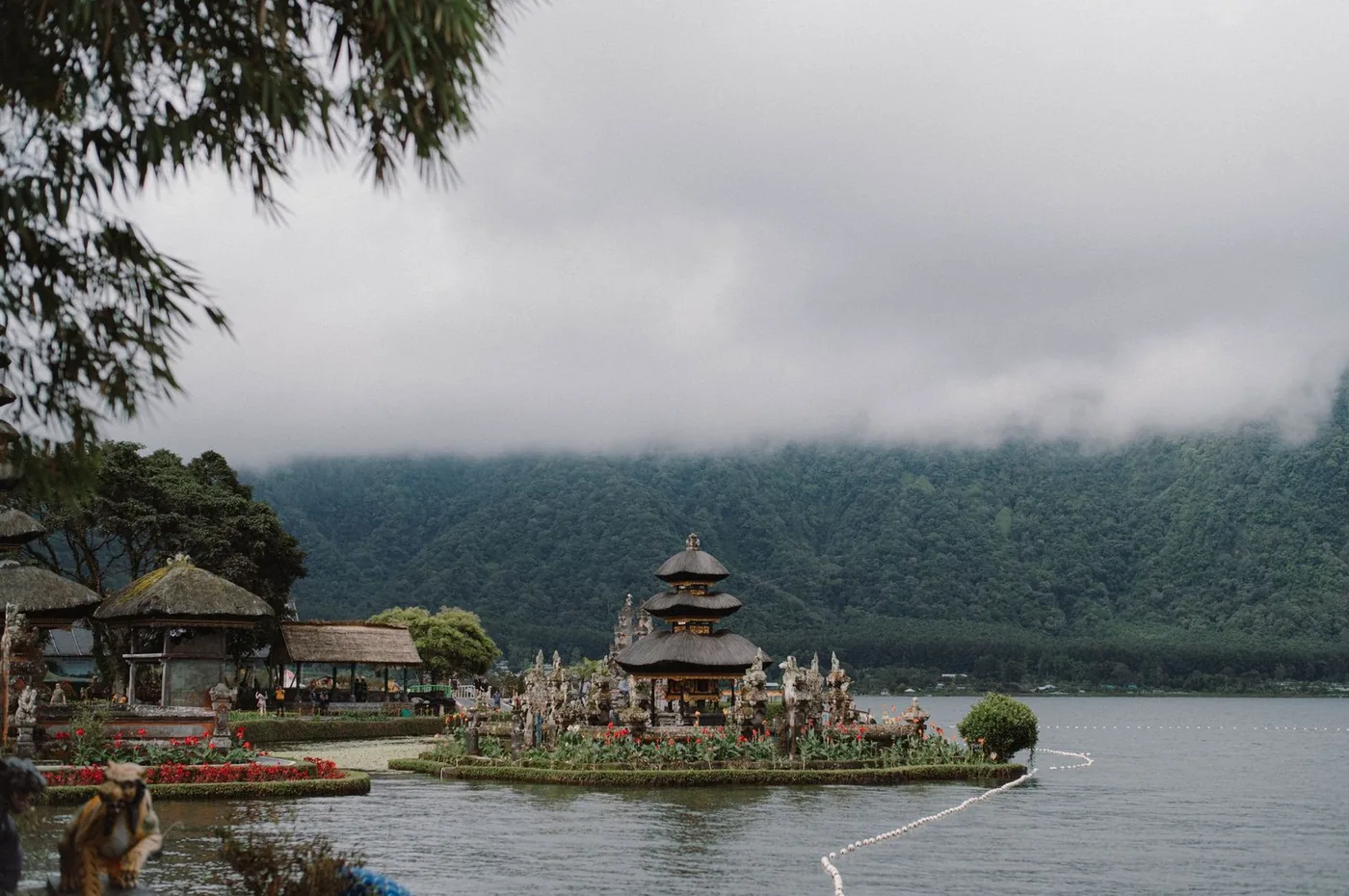
We live in a noisy world. Traffic, notifications and a constant background hum are so normal that most of us have no recent memory of genuine quiet. Bali, once a year, does something about this on a scale that has no real equivalent anywhere else: on Nyepi, the Balinese Day of Silence, the entire island shuts down for twenty-four hours.
The scope of it surprises people. Nyepi marks the Saka new year, and for one full day the island observes four restraints: no fire or light, no work, no travel, and no entertainment or indulgence. The airport closes. The roads empty. Shops and offices shut. Even the beaches are off limits, and traditional village wardens walk the lanes to see that the quiet holds. Visitors are expected to stay within their accommodation, and almost everyone does.
The night before could hardly be more different. Ogoh-ogoh — enormous, grotesque papier-mâché demons built over weeks by neighbourhood youth groups — are paraded through the streets with gamelan and torches, spun at crossroads to disorient the spirits they represent, and in many places burned. The noise is deliberate and cathartic: the island makes as much of a racket as it possibly can, and then, at dawn, stops completely.
The purpose behind it is self-examination rather than mere abstinence. The silence is intended to make the island appear empty and uninteresting to malevolent spirits, and at the same time to give everyone living there a day with nothing to do but reflect. It is a spiritual reset built into the calendar, protected by consensus, and observed by an entire population at once rather than left to individual willpower.
The side effects are remarkable and increasingly well documented. Air quality over Bali improves measurably in a single day. The reduction in noise and light is dramatic enough that the night sky over the south of the island, normally washed out, becomes properly dark and full of stars. For anyone who has spent an evening on a Nyepi terrace with no engine noise anywhere, the memory tends to outlast most of the holiday.
For a visitor, the practicalities need planning rather than avoiding. Flights in and out are impossible on the day, so build it into your dates. Buy food beforehand, since nothing will be open. Expect no transport of any kind. Accommodation will keep guests fed but will run dim, with curtains drawn after dark and no pool music. Treated as an inconvenience it is a wasted day; treated as the point, it is often the best one.
What Nyepi really offers is a working example of something most cultures have quietly lost: a collective, non-negotiable pause. Not a personal digital detox squeezed into a weekend, but an entire society agreeing to stop at the same time, so that nobody is missing out and nobody has to justify it. Whatever your beliefs, it is difficult to spend a Nyepi in Bali and not come away wondering why the rest of us abandoned the idea.
You do not need to be on the island to borrow from it. One evening a week without screens, one morning without a schedule, one day a year where the house simply stops — the mechanism is portable even if the scale is not. The island's insight is that quiet is far easier to keep when it is shared, and that a day of nothing, properly committed to, is not lost time at all.