
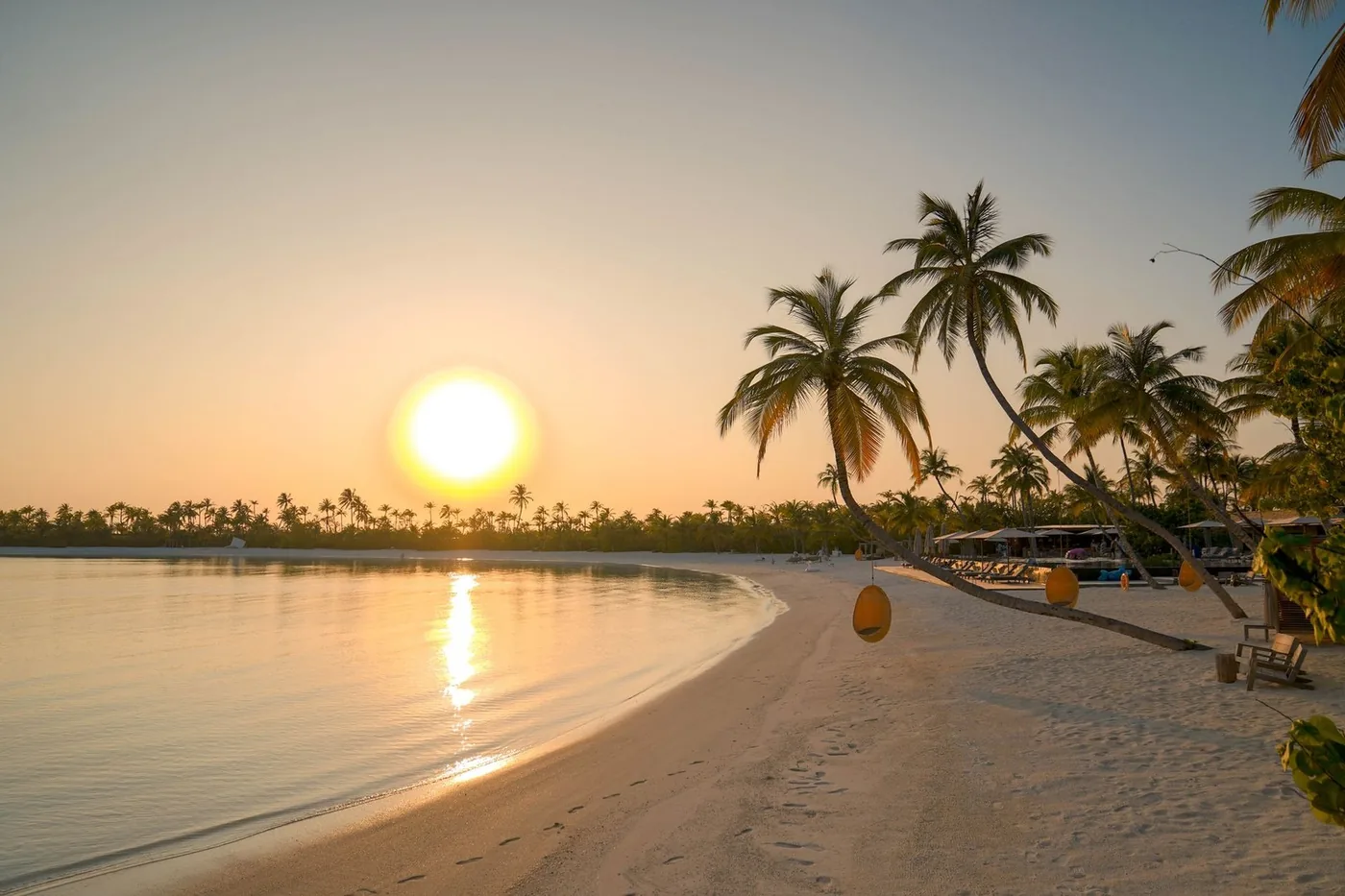
Hot countries are organised around a fact that visitors take an oddly long time to accept: the middle of the day is not the good part. Locals have known this forever and structure life accordingly — work early, rest through the heat, come out again in the evening — while holidaymakers routinely sleep until nine and then wonder why everything feels like an effort by eleven.
The hour after first light is the one to claim. The air is as cool as it will be all day, the light is low and gold, the humidity has not yet built, and the noise of engines and voices has not started. Beaches that will be crowded by ten are empty. Markets are at their busiest and best. Temples and terraces that photograph badly at noon look extraordinary. It is, straightforwardly, the best hour available and it is free.
It is also the hour when a place is most itself. At six in the morning you see the actual working day beginning — the offerings being laid out, the fishing boats coming in, the sweeping, the school run, the first coffee being poured for people who are not on holiday. Nothing has been arranged for you, which is exactly why it is worth seeing.
The wildlife agrees. Birds, primates and most mammals are active at dawn and again at dusk, and dormant through the heat in between. Every guide in the tropics will tell you the same thing, and every guide has spent years watching people book the ten o'clock walk anyway. If you want to see animals, the alarm is not optional.
Then there is the middle of the day, which the local rhythm treats as a rest and visitors treat as a challenge. Two hours out of the sun after lunch — reading, sleeping, doing nothing in the shade — is not laziness but the accepted technique for having any energy left at six in the evening. Houses in the tropics are designed for it, with deep verandahs and shaded rooms that exist precisely for that part of the day.
Coming out again in the late afternoon completes the shape. The heat drops, the light goes long and warm, the streets refill, and the whole place becomes sociable in a way it simply cannot be at one in the afternoon. Two good active periods either side of a proper rest gets you far more out of a day than one long unbroken slog through the worst of it.
This is easier to adopt than most holiday resolutions because the climate does the enforcing. It is genuinely more pleasant to be up at six and horizontal at two than the reverse, and after three or four days the body tends to settle into it without much argument. Going to bed earlier follows naturally, which is no bad thing on a holiday either.
The broader point is that hot places have already worked out how to live in themselves, and the pattern is there to be copied rather than resisted. Take the quiet hour, take the afternoon off, come back out in the evening. It costs nothing, it makes the heat a non-issue, and it hands you the two best hours of every single day of the trip.