
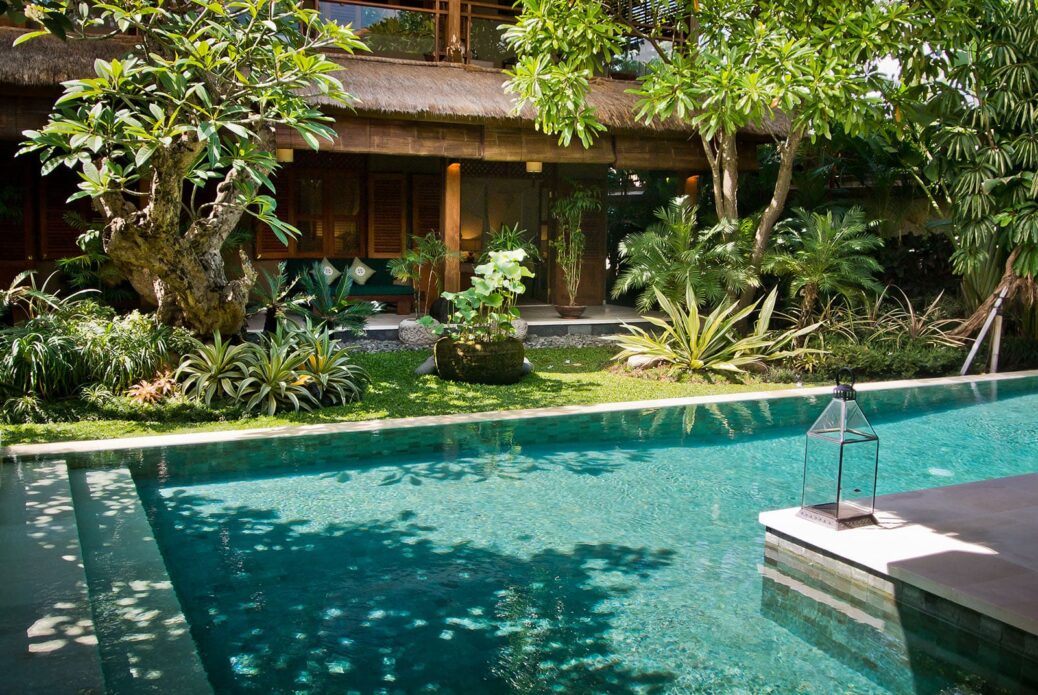
In the West, our homes are designed to seal us off from the elements. We build thick walls, install double-glazing, and rely on central heating to keep the weather out. But in the tropics, true luxury is about inviting nature in. This design philosophy, known as “Tropical Modernism,” is what gives the quintessential Bali family villa its unique architectural soul.
1. The Art of Airflow
The core principle of this style is passive cooling. Instead of relying entirely on air conditioning, traditional high-end estates use soaring ceilings and open-sided pavilions to capture the ocean breeze. This creates a living environment that feels breathable and alive, unlike the sterile, recycled air of a hotel corridor.
Architects in Bali have mastered the art of cross-ventilation. By positioning living areas to face the prevailing winds and using wide eaves to protect against the sun, they create a microclimate that is naturally cool. It is a sensory experience—feeling the movement of the air and smelling the rain on the hot earth.
2. Blurring the Lines Between Indoors and Outdoors
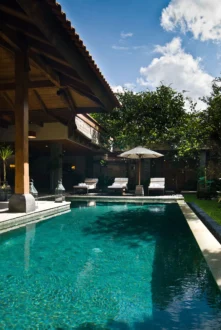
A true tropical home doesn’t end at the doorstep. The garden is treated as another room. Bathrooms are often semi-outdoor, allowing you to shower under the stars, while living areas flow seamlessly into the pool deck. This connection to the “Earth’s Echo”—the sound of water, the rustle of palms—is proven to lower stress levels.
This “Biophilic Design” is not just about aesthetics; it is about wellness. Studies show that merely looking at greenery can lower blood pressure. In a private villa, you aren’t just looking at nature; you are living inside it.
3. Design in Action: Villa Kinaree Estate
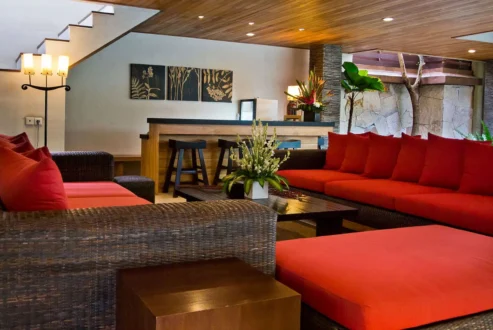
For a masterclass in this architectural style, one needs to look at the Villa Kinaree Estate in Seminyak. The estate creates a sanctuary where the architecture acts as a frame for the surrounding nature.
By utilizing vast teakwood columns and open-plan living pavilions, the estate achieves that rare balance of grandeur and grounding. It demonstrates that luxury isn’t just about gold taps and marble; it’s about the luxury of space, air, and light. It serves as a prime example of how sustainable design concepts can be applied to high-end hospitality.